Blog 7


After reading Academic Writing: Chapter 7, “Reading and Writing in the Humanities,” I realized just how much the humanities rely on language and structure to create meaning and interpretation rather than just listing facts or data. One of the main things that stood out to me was how writing in the humanities focuses on analysis, interpretation, and argument. Instead of simply summarizing information, the writer explores deeper meanings, often focusing on how or why something matters. The structure usually follows a flexible but logical flow — an introduction that presents a claim or interpretation, body paragraphs that analyze evidence (like quotes or scenes), and a conclusion that ties everything together by explaining the significance.
Language in the humanities is also very distinctive. The text mentions how writers often use interpretive, descriptive, and figurative language to express ideas. For example, instead of saying “the character is sad,” a writer might describe how the author uses imagery, tone, or symbolism to convey emotion. Humanities writing tends to value voice, tone, and nuance, meaning the writer’s perspective matters just as much as the evidence they present. The references in these essays are also more textual and contextual, instead of citing experiments or statistics, writers reference primary sources like literature, art, or historical documents and secondary sources like scholarly interpretations. When I read the student sample paper, I noticed that it did a good job following these conventions. The student used clear topic sentences and analysis of quotes to support their interpretation. I also liked that the paper showed an awareness of tone and word choice, which made it feel engaging instead of robotic. However, I did find a few things lacking — the conclusion didn’t fully explain why the analysis mattered, and a few transitions between paragraphs felt rushed. The paper could have benefited from a stronger sense of closure and a more polished flow between ideas. Overall, though, it showed a strong grasp of what humanities writing looks and sounds like.

Approve |  |  | Edit |
1 Comment

Blog 7


In Chapter 7 of Academic Writing, the authors explain that reading and writing in the humanities tend to focus more on interpretation and meaning rather than facts or data. Writing in this field is about analyzing ideas, texts, and artwork, and explaining how they create meaning. The chapter helped me see that writing in the humanities is less about giving one “right” answer and more about building an argument that makes sense based on the evidence you find. One important part of structure in humanities writing is the thesis statement. According to AW, “a thesis in the humanities should make an arguable claim about meaning” (p. 176). The chapter also notes that essays in the humanities typically follow a flexible structure, consisting of an introduction, body paragraphs that develop ideas with examples, and a conclusion that reflects on the argument. It’s less formulaic than a science lab report or history essay. When it comes to references, AW explains that humanities writers often use MLA format and focus on textual evidence (p. 185). This means quoting or paraphrasing the author’s exact words and explaining their meaning. The chapter gives the example: “As Woolf writes, ‘A woman must have money and a room of her own if she is to write fiction’ (Woolf 4).” Then the writer would analyze that quote instead of just dropping it in. The explanation part is key—it shows that you understand the quote’s purpose in your argument. Looking at the student sample paper in the chapter, you can see these techniques in action. The student has a clear thesis and uses quotes from the story to support their ideas. The paper also stays focused and uses analytical language. However, some paragraphs feel more like summaries than analyses, and a few quotes could benefit from more explanation. I think adding more interpretation and smoother transitions would strengthen the paper. Overall, Chapter 7 helped me understand that writing in the humanities is about making an argument through interpretation and analysis. It’s not just about what a text says, but about why it matters and how the author creates meaning.

1 Comment

Blog Post 7: How bout that Writing in the Humanities


So this week you read AW: Chapter 7, “Reading and Writing in the Humanities.” For this blog post, please discuss in detail as many of the common elements of structure, language, and reference in the humanities as you were able to identify and give examples from the text. After that, read the student sample paper near the end of the chapter and identify and give examples of as many of the elements of structure, language, and reference as you can find. BE SPECIFIC. What do you find lacking? This will get you in the habit of discussing these items in a piece of writing. Thus helping you to discuss these things in your own writing.

What have I learned?


For my favorite book and chapters, I honestly learned something valuable from each one. I really enjoyed the “They Say, I Say” book because it gave me practical tools that I can actually use in my writing here at Longwood. The part about juxtaposition, how to balance what others say with what I think is especially helpful. I learned that writing doesn’t always have to sound complicated or “academicspeak”; it can be more natural, like “normalspeak,” as long as it’s clear and supported by sources. I also liked learning how to include what peer-reviewed authors say and then respond with my own opinion, whether I agree or disagree. It made academic writing feel more like a conversation.

I also enjoyed “Understanding Rhetoric.” It reminded me of things I learned before, like ethos, pathos, and logos, but in a more creative way. Learning about kairos, the right time and place to say something, was new for me. I liked how the book showed that good writing means putting yourself into your work, almost like taking on a character. It made me think differently about how I communicate.

As for “Academic Writing,” I liked learning about structure, language, and references in different disciplines. I now understand how word choice can strengthen or weaken an argument depending on the discipline you’re writing for. That was very interesting to me.

My least favorite readings were also from “Academic Writing, ” not because they weren’t useful, but because there were just too many words! I’m the kind of person who likes things straight to the point. That’s why I liked “Understanding Rhetoric” more. I don’t always have time for long, wordy explanations; I’d rather have bullet points of the most important things to learn.

I still don’t feel completely confident in my writing ability. I’m a detailed and meticulous person, and I used to have a really good memory, one of the reasons I graduated cum laude in nursing school. But now, I feel like my pre-menopausal symptoms sometimes interfere with the details I try to remember. I can usually recall the main idea or the “gist,” but not word-for-word, which makes me feel less confident in my writing. My weaknesses are paraphrasing, grammar, and expanding on my ideas. My plan is to keep practicing, continue reading about grammar, and work on writing more regularly until it becomes more natural and I gain back my confidence.

What have I learned? Blog Post #6


This semester has been completely different for me, as I am no longer in high school anymore. I have definitely done a lot of writing not just in this class, but in general. For English 165, I learned a lot of material that I have never heard about in my entire life. My favorite chapters of Understanding Rhetoric are 3 and 7, because 3 talks about writing identities, and how the author writes to a specific audience in a way they can feel related. And 7, because revision is crucial for writing, it helps in becoming a better writer by identifying the errors made throughout the writing. my least favorite is issue 6, just cause it has a lot of research content.  It has a lot of steps to follow in order to do a good research. for TSIS, chapter 10 , It was more engaging, because it talked about informal writing, meaning, readers don’t always need to read a writing with a difficult language. that a writing can be clear and simple and still be a good writing. making it easy for writers like me that struggle with writing in a advanced mannered way. In my opinion, these books have helped me understand how a good writing works.  I am still struggling but I have seen the progress I have made since the beginning of the semester. Learning the importance of good formatting will help me succeed for future projects. As well as setting the tone and voice to acquire the reader’s attention. I still need to work on all of this, but I believe my strength is writing down the points I want the reader to focus on. Over all , I considered myself as someone who is still working on getting better, and I think a way to make more progress is doing more assignments like this. That way I can look back at the rules of writing, and then revise everything to make corrections, and then I can learn from it as I go.

1 Comment

What I’ve Learned-blog post #6


Looking back on what I’ve learned thus far in English 165 I wouldn’t be able to fit it into this blog. I’ve loved reading books like the They Say, I Say as well as excerpts from Academic Writing. Honestly I have a love hate relationship with my writing. Some days I think im doing great cranking out at least 3 pages of writing, other days I can barely write a sentence. My writing though I would say has improved a lot, learning lots about research and how to find good credible sources. As well as learning how to right in a new format with APA when i was preciously used to MLA format. I see my strengths in writing being mainly having a distinctive voice in tone. When I look at my writing compared to others I can really see myself and distinctly recognize my writing. I’m good at taking my thoughts and putting it on the page even though sometimes it turns into a ramble. My weakness is definitely citing my sources, all though I have definitely gotten better over the first half of the semester it’s still a work in process. Overcoming this weakness of mine is going to be a long process I can already tell. I rarely have the patience to take the time and learn the formatting. But I believe switching over to the new formatting of APA I will eventually get used to citing my sources that way. I would say my knowledge of Structure Language, References in the four disciplines are very limited. I only know a few different things about the scientific view because most sources related to nursing fall within that. I definitely need to grow my knowledge before the final because I know that it mostly revolves around that and using your writing throughout the semester to back up your information.

Blog Post #6


Throughout the semester I have had the opportunity to get to know myself through writing, especially in blog posts. So far, my favorite reading has been chapter 3 in Understanding Rhetoric. This chapter is about writing identity. I enjoyed reading chapter 3 because I learned how writers can change their identity based on the audience. I don’t have a specific reading I do not like but, most of the chapters in “They Say, I Say,” are a little more boring compared to “Understanding Rhetoric”. Overall, the readings from this semester are all very useful when it comes to improving writing skills. Although I thought some of the readings were boring, I have used lots of the information from each chapter within in my writing. I feel like over the span of this semester my writing has improved. I have learned how to use APA format along with in-text citations. I do still feel as though my writing could use some improvement. I tend to repeat the same idea just with different words, which isn’t engaging for the reader. I also have an issue of going into too much detail with certain topics and I end up rambling. On the other hand, I feel as though I am good at getting my point across and backing up my statements with research. I have also improved on citations. In order to overcome my weaknesses in writing I plan on continuing to practice and asking for help from my professors and even the writing center. As of right now, I know a quite a bit about structure, language, and references. I know with each of the four disciplines have different structures. With the humanities discipline writers use MLA or CMS when writing. Using language in a humanities paper would be more academic but still engaging. Lastly, references in a humanity-based writing is going to include citations in the format of MLA style.

1 Comment

Blog Post 6


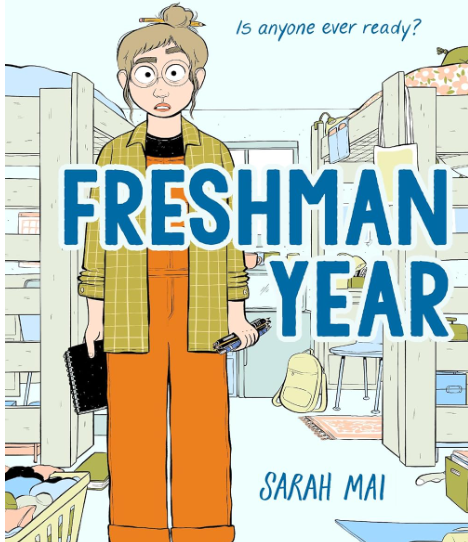
Since this semester has begun, I have learned both new things and more about other topics. The books we have been reading and the quizzes that follow are both helping me get a better understanding of the chapters. My favorite book we have been reading besides Freshmen Year has to be the Understanding Rhetoric. I tend to like graphic books more and have enjoyed them for years. My favorite chapter of Understanding Rhetoric has to be chapter one. The reason I like the chapter so much is due to the fact that it uses philosophical figure such as Aristotle and Plato to explain what each thought rhetoric was, since they disagreed on the subject. It uses past and current societies to explain what ethos, pathos and logos are. My least favorite book we have been reading definitely has to be They say, I say. There’s no specific chapter or part that comes to mind that I dislike. The way I feel about my writing is neutral. I don’t think I’m a good or bad writer. This is because I am good at genres like nonfiction and fantasy and am terrible at more scientific and formal settings when I write. I find it hard to write about a topic if I’m uninterested in it which tends to happen a lot. I plan to work on my writing in genres I am less comfortable in so I can learn how to write formally. This will help me in future settings as formal writing is used in schools and careers. I have mostly written in all my assignments about the social sciences and humanities since all my desired career paths are in those two fields. I know the SLR grid involves what citations are used in each discipline. I know that understanding the SLR grid can help me become a better writer since I will know what discipline requires what and how I can relay information correctly.

2 Comments

Blog Post #6, What have I learned?


I was never terrible at writing, but I cannot say I was the best at it either. I did not understand why this class was mandatory for freshman until I had spent some time in it. I can say I have seen a few changes in my writing, but they are positive changes, my writing is now more up to the right standards. It is not as perfect as it could be, but it is definitely better than before. I have learned how to properly do citations, how my topic sentence should look like, to stay on topic, include what is important, and that I need a good hook in order to captivate the reader’s attention. Although citations were my least favorite thing to learn. Something important to keep in mind when writing is that every class will be different, especially if they are from different areas, for example: Humanities, Social Sciences, Natural Sciences and Applied Sciences. Not only have I learned how to improve my own writing, but I have learned how to help someone else improve theirs too! I learned that I cannot do it for them, but I can help lead them in the right direction with my feedback. When you are giving feedback, it is crucial that you do not try to force your writing style onto them, do not give bias feedback, and give as many details as possible so that they know exactly what it is that they need to work on or go back and review. Once I get a hang of what to write about, I think I can write up something decently good, my issue is having enough creativity to create a hook strong enough to reel the reader in. I will admit, it is not as hard as it seems to be it is just that I unfortunately procrastinate to the last few days before it is due. Therefore, I feel more pressure to get it done and probably do not do as good of a job as I could have if I had done it earlier. If I do happen to struggle with remembering how to do something I can always go back to my books Understanding Rhetoric, Academic Writing and They Say, I Say. Thankfully, they are not hard to read and understand. The semester is not over yet, so I hope to improve my writing a bit more as it progresses!

1 Comment

Blog Post #6


As this fall semester comes to a close, I have been thinking about what I have learned so far in English 165 and how my knowledge of writing has changed. When I first began the class I believed that I knew how to write effectively however, as I went through classes I learned that there is so much more to writing than I thought.

However, after reading through the books “Understanding Rhetoric”, “They Say, I Say”, and Academic writing, I have been able to understand that writing is so much more than that. Now I understand that writing is a form of communication and it allows people to express ideas and thoughts.

One of my favorite chapters from the book, “Understanding Rhetoric”, is chapter 1. I really enjoyed coming back to the topic of ethos, pathos, and logos because I honestly forgot about these topics since we discussed them at the beginning of my high school career. I also found it interesting reading about all the historical figures like Plato, Aristotle, and Cicero and their personal opinions about the topic. Although I found this interesting, it was also pretty interesting to see how far back in time these rhetorical devices really go. 

However, one of my least favorite chapters would have to be Chapter 7 which focused on “Reading and Writing in the Humanities”. Even though I understand that this is important information to know, I found it very unconnected from my personal writing experience and major. For example, I found it interesting that the humanities use Chicago and MLA as their style guides but, I also found this unrelated to my major being business where we use APA. However, I know that being able to understand writing from other view points is important because I have learned that writing is a form of communication.

My current strengths are being able to organize ideas and be able to flow clearly between my paragraphs. However, I think I need to work on my ability to edit and proofread after I write. I plan to improve on being able to proofread more effectively and use the feedback from my professors and peers to better improve my writing.

Right now I have learned that being able to write across different majors and careers requires special kinds of styles, languages, and structures that better fit that particular field of work. Every career sees writing differently but they all share the same ideas of communicating clearly and efficiently. Being able to understand these differences has helped to expand my portfolio as a writer and be able to adjust my style to fit different academic classes and situations.