Blog Post 8, What my next semester and summer will be like for me.


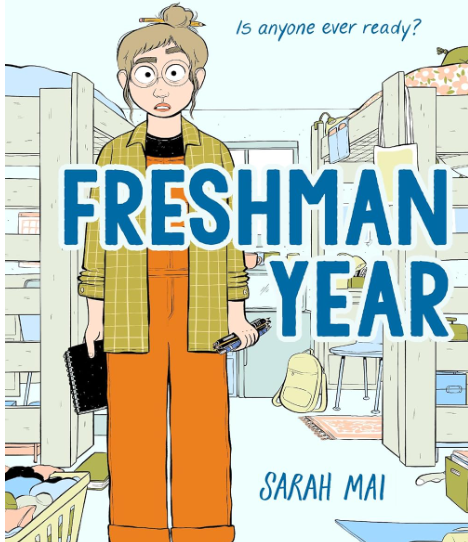
As I approach the end of my first semester, reading Sarah Mai’s “Freshman” gave me a moment to pause and consider how our college experiences align, and where they take different turns. Sarah completed her first full semester and faced some big decisions, like whether to transfer to art school. In the end, she chose to stay, while some of her friends’ changed majors. That’s life: adapt, adjust, and change plans as needed. For me, the path is already clear. I’ve committed to accounting and mapped out the classes I need from now through senior year.

Sarah’s spring break sounded refreshing, rainy, yes, but still a true break. I’m hoping mine will be just as restful. Fall break was anything but relaxing; I was buried in assignments. I’m grateful I got into the classes I needed for spring, but I do hope the homework load lightens up. This semester stretched me, it was intense.

Sarah also took a spontaneous trip to New York with friends, which I admire. That kind of spontaneity gave her the chance to explore the city and spend quality time with her besties. For me, spring break will (hopefully) be a break from school assignments, fingers crossed. I won’t be interning yet this summer since I need more coursework first, but I’ll be keeping my mind sharp with reading, helping manage our two LLCs, and continuing my roles as business administrator, CFO, domestic engineer, and drumroll please, private nurse to a Marine. Yes, I wear all the hats. No, I don’t get hazard pay. Sarah plans to work as a lifeguard over the summer, which sounds like a fun and active way to earn and unwind. My summer plan is to take one thing off my plate: schoolwork. I 

Sarah plans to work as a lifeguard over the summer, which sounds like a fun and active way to earn and unwind. My summer plan is to take one thing off my plate: schoolwork. I might take one class after junior year to stay on track for graduating in 2.5 years with a minor, which means stepping outside my comfort zone and taking six classes instead of five.

Sarah’s story reminded me that college is full of twists and turns. While her journey involves spontaneity and exploration, mine is about structure and steady progress. We’re both learning, growing, and adapting, and that’s what makes this experience so meaningful.


Planning For The Future.


Wow! This semester has really flown by. It feels like yesterday was August 2nd and I was moving in. Now it is November and I just had my first basketball game. The time has already flown by and the days go by insanely fast. Before I know it, it’s going to be next semester and soon after that I’ll have finished my first year of college. When looking towards next semester I’m hoping I can do a better job at studying. Even though we are reaching the end of the semester I still don’t think I know what study habits work best for me or that my time management skills have improved. I know in this upcoming semester I’m facing a more challenging workload, which is crazy to me because this semester was already quite difficult. Being in the harder Spanish class I spend a lot of my time trying to do most of my homework in Spanish and then translating it to English. Also being a nursing major , next semester I’m going to be taking both anatomy 207 and nursing 101 which are both classes towards my major and students tend to find them quite difficult. I’m still hoping that by the end of the year my study habits will improve. As someone who has a hard time focusing for more than like twenty minutes at a time, studying is just not something that works for me. Even though I do look forward to spring break, I more than likely won’t be able to go home. After winter break I will most likely not be going home till the end of April, maybe even May. With basketball season being in full swing and competition cheer my next semester is going to be even crazier than this. This summer I will be taking another math class so I can stay on track with my major. I’m hoping it will not be too difficult as I plan to work a ton this summer. But hopefully I am still able to get a little break from school and just have time to relax.

Blog #8


           I feel as though this semester has gone by extremely fast, the days flew by and I had a lot of fun experiencing this new college. Though we are not fully finished with the semester, I am ready for it to be over and I feel prepared enough to do all of my finals. I definitely see myself lining up with Sarah’s experiences as she had a very fulfilling time in college and all of the events were unique in a way showing that not everyone views college the same. I am a sophomore and I transferred here from a different university, therefore I am new to this campus and the classrooms. After being here for almost a full semester I realized how much I appreciated the change and how I am so excited for the semester coming up. I fear I will face problems surrounding my class subjects and how I might be overloaded with work. This worries me, especially since I am not only taking English classes which are my strong suit and am instead taking archeology classes and math classes. I will definitely be thinking about spring break and how excited I will be to go home again and see my family. My family is extremely bad at planning trips and events so we do not have anything set and stone yet, but I feel like with some convincing I can get them to go somewhere other than our hometown for a getaway. I plan on working a lot during summer and spring break which might deviate from any plans. It would still be nice to brainstorm some ideas and see if they would be possibilities. I hope to find some internships here at Longwood later on, possibly even this summer coming up. Overall, my mind is ready to be done learning for this semester and have a total reset so that I am able to do my best work for the semester coming up. I feel that with the time we have left I am going to be able to achieve great final scores on all finals and relax for a good amount of time with no worry about school. 

1 Comment

What will next semester look like? Blog post #8


As almost coming to an end of my first semester of college, I can say that I have been through a lot of ups and downs. I have learned a lot about stuff that I never though I would be capable of doing here at Longwood. Such as getting comfortable with my classes and schedules, I have come to enjoy my professors way to teach. Everything has gone by so quick, that I haven’t have time to process all of the big changes in my life. In each class I have given every percent of me, some were one hundredth percent and others less than that.

I am very nervous and excited for  my new classes for the upcoming spring semester, there’s new challenges that are waiting for me to  be accomplished, and the least I want to do is wasting time on things that don’t allow me to focus on what is more important. I do not have a plan for spring break; However, there is a chance that I  will be taking it as a break from all the tension I will go through from classes. But my main goal is making sure I do complete all of my credits that are required so that I can move on to sophomore year.

This summer I want to focus on doing something that is related to my major, weather is working, volunteering, traveling, etc. I want to put into work what I learn in school, to make a progress and keep me active throughout the day so that I can start new habits when it comes to learning and putting myself out there to try out new things in the real world. I will be 19 years old by then, and its crazy to think that I will be living my last year as a teen very soon. Because even though I don’t feel ready, I still manage to get through it one way or another.

1 Comment

Blog Post 9: Let’s START Your Zines!!


For this week’s blog, I want you to actually start your Zine. You should have a topic by now, so it’s time to create. Sometimes the most difficult thing is creating the cover. That is this weeks blog post. Create your first draft of your cover, take a picture, and upload that picture, and insert it into your blog post.

Your post should discuss

  1. What is the topic for your Zine
  2. What do you know about your topic and what research, if any, are you going to include
  3. What steps did you take to create this cover.

Often creating the cover gives us the creative spark needed to get started on the rest of the Zine. DO NOT LEAVE THIS TO THE LAST MINUTE.

I can’t wait to see these first drafts of covers. Remember, it’s just a draft and can take whatever form it needs to take. Just be sure to include a picture, and HAVE FUN!!

Blog 8: What Does the Next Semester Look Like for You?


We have now completed Freshman Year by Sarah Mai. Unlike you, she has completed her first full semester while you are quickly approaching completion of your first semester. As you look forward to spring semester, how do you see your experiences possibly lining up with Sarah’s? What challenges do you think you’ll face in the upcoming semester? Will spring break be on your radar from day one? Do you already have plans for spring break? Do you have plans for your summer already: traveling, working, internship, vegging?

Think through how you think your upcoming semester will reflect of differ from Sarah’s.

4 Comments

Blog #7


Hello Readers,

Today I will be talking about Chapter 7 reading and writing in humanities and the common element structures among other topics in my post. Structure is often clear and in line when it follows a thesis statement or the main body paragraph and conclusion. Because it should be helping present the evidence and allow the reader to analyze the read or material and later on present a logical argument across either side. And in chapter 7 I could tell the writer had a lot of structure in the piece about writing in the humanities. In the journal the writer used language so that the reader could understand in a simple way what point they were trying to get across in the writing. And at some point they used a very formal tone with certain pieces but not with the whole article itself. But it does make it to where the reader can easily understand the ideas and thought process and the ideas that have presented themselves. And when I was looking at the reference area they had properly cited all the sources and that makes it very credible because they have a source to prove their evidence. With them citing everything correctly they attribute the source correctly and it avoids them being accused of plagiarism in their writing when they have the sources to back it. I believe all three of these elements are what make it very important for everything to tie together for the reader to understand where they are coming from and give credit to where they found proof or evidence backing up their writing. And the way the writer brought the information together caught my attention and made me focus and interested in the topic at hand without adding extra words or something that doesn’t belong. They found a way to pull me into the reading so they know how to catch the reader’s attention and that itself is a big point in writing you must put your readers in.  

1 Comment

Blog Post 7


After reading Chapter 7, “Reading and Writing in the Humanities,” I realized how different writing in this field really is. It’s not just about giving information or following a strict formula ,it is about connecting ideas in a meaningful way. The structure still matters, but it feels more natural and flexible. Instead of sticking to a set pattern, the writing builds on thoughts and emotions, helping readers understand why something matters, not just what it means. I like that humanities writing lets you explore ideas and think deeply rather than just presenting facts.

The language in humanities writing also stood out to me. It’s expressive, emotional, and sounds more in depth. Writers use tone, imagery, and reflection to pull you in and make you feel connected to their ideas. In the student sample paper, I noticed how the writer’s voice came through; it didn’t sound stiff or too formal. It was thoughtful but still human, and that made it easier to follow and connect to. It reminded me that strong writing doesn’t have to sound robotic to sound intelligent.

When it comes to references, I really liked how they were used to support ideas rather than being self explanatory. It felt like the writer was joining a bigger conversation instead of depending on other people’s words to sound credible. That made the writing feel more natural.

What I still find hard is figuring out how much of my own opinion to include. I love that humanities writing gives space for your voice, but it’s hard to know where to draw the line between personal and analytical. Still, that’s what makes it so interesting, t pushes you to think for yourself and write with depth and meaning. I think that’s something I want to keep working on, finding that balance between being relatable and being academic, because that’s where the best writing really exists.

2 Comments

Blog 7


During my time reading Academic Writing: Chapter 7 one thing that stood out to me was the way it said that understanding a song is similar to what a humanist does when they research and write. For example, when you are listening to music you look for how it is similar or different from other songs, or even knowing who the singer is. By doing this you are performing how humanities think. You are making meaning of the whole song by connecting it to the social and cultural events that are around when it is being made. Humanities scholars do this all the time when they are looking at novels, essays, poems, or historical documents. Close reading is a key method for understanding text. In the chapter it says to create a content/form-response grid, where “content” is what is happening in the text and “form” is the way the piece is structured. This helps writers and readers see what the text is saying and how it is being said. The structure of humanities writing is normally clear and logical arguments formatted in such a way like an argumentative essay. The language tends to be formal, avoiding slang and expressions. The reference types are typically MLA or Chicago style. After reading the student sample paper I was able to identify many elements of structure like using the content/form-response grid. She also uses an active voice to show she is doing the action. She uses proper transitions to connect one idea to another. She also uses the reference type of MLA as it is cited at the end of the paper. The language tends to explain what is trying to be said by using big words and not using slang. During this time rereading chapter 7 I feel I have a better understanding of reading and writing in the humanities.

1 Comment

Blog 7


Dear Blog,


After reading AW chapter 7, I was able to pick up on a lot of the structure, language, and references in the humanities writing. AW:7 describes the humanities as being about exploring the “meaning and interpretation of something and how it reflects on the human experience.”

In terms of formatting and reference of the humanities, papers most often use the MLA format. This is typically used in the literature area of the humanities. Along with this, the Chicago Manual Style is also used mainly in the history area of the humanities. 

When it comes to structure, most papers are thesis-driven. This is when an author makes a direct claim and then defends it with sources. Developing a good and defendable thesis is key to a good humanities paper. Without it an author will struggle to write something argumentative and not be able to prove their “point.”

When it comes to language, authors use an active voice, meaning that the subject is the person doing the action. Along with this, writers use rhetorical devices and figurative language like similes and metaphors. AW:7 also mentions that writers also use language that is “creative and playful.” This is to keep readers engaged and interested in their argument. 

Within the sample writing included in AW:7, I noticed many of this structure, language, and reference. For example, the author of this paper has a clear and direct thesis: “Chopin explores marriage as the opposition of one’s true self and desires.” The author also uses an active voice. For example, “Louise is informed of Brentley’s death.” Along with this, at the end, we also see the author use the MLA format to cite her source. Although it is just one source, it is still important to use MLA as it allows us, as the readers, to easily find where the author got their information from. 

Overall, I think that it is helpful to analyze other people’s work in the humanities to improve our own. Picking up on different authors’ uses of structure, language, and reference helps us reinforce our knowledge of the discipline. I hope that you found my opinions and observations on AW:7’s teaching of the humanities helpful.

Happy writing,

Cullen


1 Comment