Blog 8: What Does the Next Semester Look Like for You?

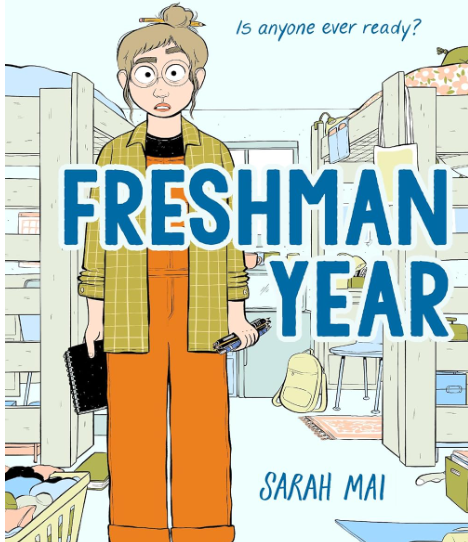
We have now completed Freshman Year by Sarah Mai. Unlike you, she has completed her first full semester while you are quickly approaching completion of your first semester. As you look forward to spring semester, how do you see your experiences possibly lining up with Sarah’s? What challenges do you think you’ll face in the upcoming semester? Will spring break be on your radar from day one? Do you already have plans for spring break? Do you have plans for your summer already: traveling, working, internship, vegging?

Think through how you think your upcoming semester will reflect of differ from Sarah’s.

 
4 Comments

Blog #7

Hello Readers,

Today I will be talking about Chapter 7 reading and writing in humanities and the common element structures among other topics in my post. Structure is often clear and in line when it follows a thesis statement or the main body paragraph and conclusion. Because it should be helping present the evidence and allow the reader to analyze the read or material and later on present a logical argument across either side. And in chapter 7 I could tell the writer had a lot of structure in the piece about writing in the humanities. In the journal the writer used language so that the reader could understand in a simple way what point they were trying to get across in the writing. And at some point they used a very formal tone with certain pieces but not with the whole article itself. But it does make it to where the reader can easily understand the ideas and thought process and the ideas that have presented themselves. And when I was looking at the reference area they had properly cited all the sources and that makes it very credible because they have a source to prove their evidence. With them citing everything correctly they attribute the source correctly and it avoids them being accused of plagiarism in their writing when they have the sources to back it. I believe all three of these elements are what make it very important for everything to tie together for the reader to understand where they are coming from and give credit to where they found proof or evidence backing up their writing. And the way the writer brought the information together caught my attention and made me focus and interested in the topic at hand without adding extra words or something that doesn’t belong. They found a way to pull me into the reading so they know how to catch the reader’s attention and that itself is a big point in writing you must put your readers in.  

 
1 Comment

Blog Post 7

After reading Chapter 7, “Reading and Writing in the Humanities,” I realized how different writing in this field really is. It’s not just about giving information or following a strict formula ,it is about connecting ideas in a meaningful way. The structure still matters, but it feels more natural and flexible. Instead of sticking to a set pattern, the writing builds on thoughts and emotions, helping readers understand why something matters, not just what it means. I like that humanities writing lets you explore ideas and think deeply rather than just presenting facts.

The language in humanities writing also stood out to me. It’s expressive, emotional, and sounds more in depth. Writers use tone, imagery, and reflection to pull you in and make you feel connected to their ideas. In the student sample paper, I noticed how the writer’s voice came through; it didn’t sound stiff or too formal. It was thoughtful but still human, and that made it easier to follow and connect to. It reminded me that strong writing doesn’t have to sound robotic to sound intelligent.

When it comes to references, I really liked how they were used to support ideas rather than being self explanatory. It felt like the writer was joining a bigger conversation instead of depending on other people’s words to sound credible. That made the writing feel more natural.

What I still find hard is figuring out how much of my own opinion to include. I love that humanities writing gives space for your voice, but it’s hard to know where to draw the line between personal and analytical. Still, that’s what makes it so interesting, t pushes you to think for yourself and write with depth and meaning. I think that’s something I want to keep working on, finding that balance between being relatable and being academic, because that’s where the best writing really exists.

 
2 Comments

Blog 7

During my time reading Academic Writing: Chapter 7 one thing that stood out to me was the way it said that understanding a song is similar to what a humanist does when they research and write. For example, when you are listening to music you look for how it is similar or different from other songs, or even knowing who the singer is. By doing this you are performing how humanities think. You are making meaning of the whole song by connecting it to the social and cultural events that are around when it is being made. Humanities scholars do this all the time when they are looking at novels, essays, poems, or historical documents. Close reading is a key method for understanding text. In the chapter it says to create a content/form-response grid, where “content” is what is happening in the text and “form” is the way the piece is structured. This helps writers and readers see what the text is saying and how it is being said. The structure of humanities writing is normally clear and logical arguments formatted in such a way like an argumentative essay. The language tends to be formal, avoiding slang and expressions. The reference types are typically MLA or Chicago style. After reading the student sample paper I was able to identify many elements of structure like using the content/form-response grid. She also uses an active voice to show she is doing the action. She uses proper transitions to connect one idea to another. She also uses the reference type of MLA as it is cited at the end of the paper. The language tends to explain what is trying to be said by using big words and not using slang. During this time rereading chapter 7 I feel I have a better understanding of reading and writing in the humanities.

 
1 Comment

Blog 7

Dear Blog,


After reading AW chapter 7, I was able to pick up on a lot of the structure, language, and references in the humanities writing. AW:7 describes the humanities as being about exploring the “meaning and interpretation of something and how it reflects on the human experience.”

In terms of formatting and reference of the humanities, papers most often use the MLA format. This is typically used in the literature area of the humanities. Along with this, the Chicago Manual Style is also used mainly in the history area of the humanities. 

When it comes to structure, most papers are thesis-driven. This is when an author makes a direct claim and then defends it with sources. Developing a good and defendable thesis is key to a good humanities paper. Without it an author will struggle to write something argumentative and not be able to prove their “point.”

When it comes to language, authors use an active voice, meaning that the subject is the person doing the action. Along with this, writers use rhetorical devices and figurative language like similes and metaphors. AW:7 also mentions that writers also use language that is “creative and playful.” This is to keep readers engaged and interested in their argument. 

Within the sample writing included in AW:7, I noticed many of this structure, language, and reference. For example, the author of this paper has a clear and direct thesis: “Chopin explores marriage as the opposition of one’s true self and desires.” The author also uses an active voice. For example, “Louise is informed of Brentley’s death.” Along with this, at the end, we also see the author use the MLA format to cite her source. Although it is just one source, it is still important to use MLA as it allows us, as the readers, to easily find where the author got their information from. 

Overall, I think that it is helpful to analyze other people’s work in the humanities to improve our own. Picking up on different authors’ uses of structure, language, and reference helps us reinforce our knowledge of the discipline. I hope that you found my opinions and observations on AW:7’s teaching of the humanities helpful.

Happy writing,

Cullen


1 Comment

Blog 7

After reading Academic Writing: Chapter 7, “Reading and Writing in the Humanities,” I realized just how much the humanities rely on language and structure to create meaning and interpretation rather than just listing facts or data. One of the main things that stood out to me was how writing in the humanities focuses on analysis, interpretation, and argument. Instead of simply summarizing information, the writer explores deeper meanings, often focusing on how or why something matters. The structure usually follows a flexible but logical flow — an introduction that presents a claim or interpretation, body paragraphs that analyze evidence (like quotes or scenes), and a conclusion that ties everything together by explaining the significance.
Language in the humanities is also very distinctive. The text mentions how writers often use interpretive, descriptive, and figurative language to express ideas. For example, instead of saying “the character is sad,” a writer might describe how the author uses imagery, tone, or symbolism to convey emotion. Humanities writing tends to value voice, tone, and nuance, meaning the writer’s perspective matters just as much as the evidence they present. The references in these essays are also more textual and contextual, instead of citing experiments or statistics, writers reference primary sources like literature, art, or historical documents and secondary sources like scholarly interpretations. When I read the student sample paper, I noticed that it did a good job following these conventions. The student used clear topic sentences and analysis of quotes to support their interpretation. I also liked that the paper showed an awareness of tone and word choice, which made it feel engaging instead of robotic. However, I did find a few things lacking — the conclusion didn’t fully explain why the analysis mattered, and a few transitions between paragraphs felt rushed. The paper could have benefited from a stronger sense of closure and a more polished flow between ideas. Overall, though, it showed a strong grasp of what humanities writing looks and sounds like.

Approve |  |  | Edit |
 
1 Comment

Blog 7

In Chapter 7 of Academic Writing, the authors explain that reading and writing in the humanities tend to focus more on interpretation and meaning rather than facts or data. Writing in this field is about analyzing ideas, texts, and artwork, and explaining how they create meaning. The chapter helped me see that writing in the humanities is less about giving one “right” answer and more about building an argument that makes sense based on the evidence you find. One important part of structure in humanities writing is the thesis statement. According to AW, “a thesis in the humanities should make an arguable claim about meaning” (p. 176). The chapter also notes that essays in the humanities typically follow a flexible structure, consisting of an introduction, body paragraphs that develop ideas with examples, and a conclusion that reflects on the argument. It’s less formulaic than a science lab report or history essay. When it comes to references, AW explains that humanities writers often use MLA format and focus on textual evidence (p. 185). This means quoting or paraphrasing the author’s exact words and explaining their meaning. The chapter gives the example: “As Woolf writes, ‘A woman must have money and a room of her own if she is to write fiction’ (Woolf 4).” Then the writer would analyze that quote instead of just dropping it in. The explanation part is key—it shows that you understand the quote’s purpose in your argument. Looking at the student sample paper in the chapter, you can see these techniques in action. The student has a clear thesis and uses quotes from the story to support their ideas. The paper also stays focused and uses analytical language. However, some paragraphs feel more like summaries than analyses, and a few quotes could benefit from more explanation. I think adding more interpretation and smoother transitions would strengthen the paper. Overall, Chapter 7 helped me understand that writing in the humanities is about making an argument through interpretation and analysis. It’s not just about what a text says, but about why it matters and how the author creates meaning.

 
1 Comment

Blog Post 7: How bout that Writing in the Humanities

So this week you read AW: Chapter 7, “Reading and Writing in the Humanities.” For this blog post, please discuss in detail as many of the common elements of structure, language, and reference in the humanities as you were able to identify and give examples from the text. After that, read the student sample paper near the end of the chapter and identify and give examples of as many of the elements of structure, language, and reference as you can find. BE SPECIFIC. What do you find lacking? This will get you in the habit of discussing these items in a piece of writing. Thus helping you to discuss these things in your own writing.


What have I learned?

For my favorite book and chapters, I honestly learned something valuable from each one. I really enjoyed the “They Say, I Say” book because it gave me practical tools that I can actually use in my writing here at Longwood. The part about juxtaposition, how to balance what others say with what I think is especially helpful. I learned that writing doesn’t always have to sound complicated or “academicspeak”; it can be more natural, like “normalspeak,” as long as it’s clear and supported by sources. I also liked learning how to include what peer-reviewed authors say and then respond with my own opinion, whether I agree or disagree. It made academic writing feel more like a conversation.

I also enjoyed “Understanding Rhetoric.” It reminded me of things I learned before, like ethos, pathos, and logos, but in a more creative way. Learning about kairos, the right time and place to say something, was new for me. I liked how the book showed that good writing means putting yourself into your work, almost like taking on a character. It made me think differently about how I communicate.

As for “Academic Writing,” I liked learning about structure, language, and references in different disciplines. I now understand how word choice can strengthen or weaken an argument depending on the discipline you’re writing for. That was very interesting to me.

My least favorite readings were also from “Academic Writing, ” not because they weren’t useful, but because there were just too many words! I’m the kind of person who likes things straight to the point. That’s why I liked “Understanding Rhetoric” more. I don’t always have time for long, wordy explanations; I’d rather have bullet points of the most important things to learn.

I still don’t feel completely confident in my writing ability. I’m a detailed and meticulous person, and I used to have a really good memory, one of the reasons I graduated cum laude in nursing school. But now, I feel like my pre-menopausal symptoms sometimes interfere with the details I try to remember. I can usually recall the main idea or the “gist,” but not word-for-word, which makes me feel less confident in my writing. My weaknesses are paraphrasing, grammar, and expanding on my ideas. My plan is to keep practicing, continue reading about grammar, and work on writing more regularly until it becomes more natural and I gain back my confidence.
 

What have I learned? Blog Post #6

This semester has been completely different for me, as I am no longer in high school anymore. I have definitely done a lot of writing not just in this class, but in general. For English 165, I learned a lot of material that I have never heard about in my entire life. My favorite chapters of Understanding Rhetoric are 3 and 7, because 3 talks about writing identities, and how the author writes to a specific audience in a way they can feel related. And 7, because revision is crucial for writing, it helps in becoming a better writer by identifying the errors made throughout the writing. my least favorite is issue 6, just cause it has a lot of research content.  It has a lot of steps to follow in order to do a good research. for TSIS, chapter 10 , It was more engaging, because it talked about informal writing, meaning, readers don’t always need to read a writing with a difficult language. that a writing can be clear and simple and still be a good writing. making it easy for writers like me that struggle with writing in a advanced mannered way. In my opinion, these books have helped me understand how a good writing works.  I am still struggling but I have seen the progress I have made since the beginning of the semester. Learning the importance of good formatting will help me succeed for future projects. As well as setting the tone and voice to acquire the reader’s attention. I still need to work on all of this, but I believe my strength is writing down the points I want the reader to focus on. Over all , I considered myself as someone who is still working on getting better, and I think a way to make more progress is doing more assignments like this. That way I can look back at the rules of writing, and then revise everything to make corrections, and then I can learn from it as I go.

 
1 Comment